Posts

Shrimping It! and Arduino workshops

Image
Workshops in London on September 13th I'm running two linked half-day workshops on 23th September in central London. The Shrimp The morning workshop  is called Making the Shrimp!  It's an extended version of the very successful session I ran at BCS SPA on 30th June. In it you'll learn how to make, test and program the Shrimp - a low-cost Arduino clone on a breadboard. Y ou get to keep the hardware ! The afternoon workshop  is called Life After Blink . It consists of five experiments using an Arduino or the Shrimp. If you decide to attend just the afternoon workshop you  will need to bring your own Arduino, or buy one  when you register for delivery on the day. The price below includes the experimenter's kit but not the Arduino. You'll need to bring your own laptop for both workshop - make sure it has an available USB port! Early bird prices are available until 16 August. If you book before that date you'll pay £37.50 for a hal...

IoT Security (or lack of it) - why you should worry

Image
The Internet of Things (IoT) is cool, and business has realised it's going to be big. But is it going to be secure enough? I'm normally a pretty laissez-faire sort of chap, but I am very concerned about the current attitude towards security on the Internet of Things. I posted recently on The Analogies project , and I'll be talking about this at an IoT meeting later this year. But this is a problem right now . Here's one example. I was recently approached by someone from an open-source IoT project to see if I'd like to get involved. I had a look on their website, and what they were doing looked great. Except... There was no mention of security . I asked, and got the reply that this was not a concern, as they assumed that the home network was secure . Don't assume the home network is secure Sadly many home networks are easily hackable. The recent excitement over OpenSSL means that most hobbyist web-servers using https have been vulnerable for a...

Got a Raspberry PI B+ and need a downverter? Drop me a note.

Image
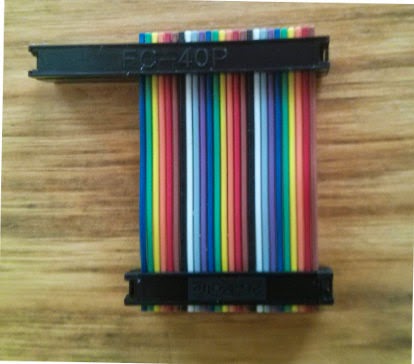
If you want to use the Adafruit cobbler or  the Quick2Wire interface board with a Raspberry Pi model B+ you'll need a downverter. (That's a 40-way to 26-way adapter). Adafruit will be shipping their version 'soon', but if you're in the UK and can't wait, I've got enough connectors and cable to put together a few. For the next few days I will make one up and post it to you first class within the UK for £4.50 including postage and packing. (I'm not VAT registered so there is no VAT to pay). Drop me an email at romilly.cocking@gmail.com .

Raspberry Pi Model B+ issue (and solution)

Image
Raspberry Pi Model B+ I've hit a bit of a hardware compatibility problem with the new Raspberry Pi Model B+ When my new Raspberry Pi B+ arrived yesterday I started wondering about the software implications . I wanted to verify that the Quick2Wire, Adafruit and Raspi.GPIO libraries work as intended on the new boards, but instead I hit a problem with the new hardware layout . The new design has 40 GPIO pins, and the people at Pi Towers have arranged that the first 26 pins have the same function as they did before. But... Twenty-six onto forty won't go! I naively imagined that this would mean I could just plug in a 26-way connector onto the correct end of the 40-pin header. It doesn't work , at least with the cables I've tried. The female sockets are so wide that they won't sit down on the 40-way header. You'd have the same problem with the cables supplied with Adafruit's cobbler, as they use standard-width IDC connectors. And the PiFace won...

Raspberry Pi Model B+ version detection

Image
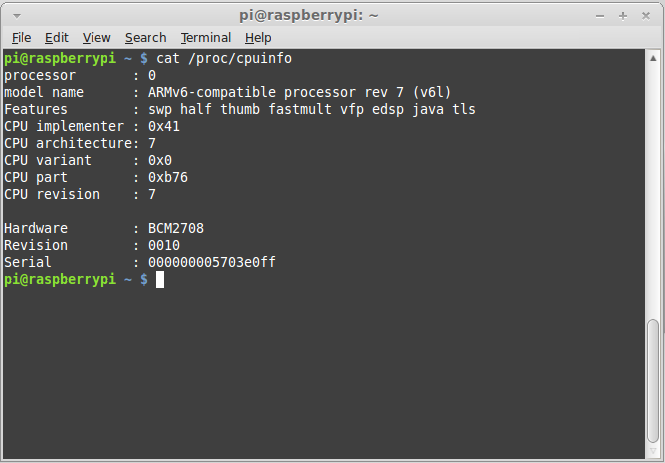
First, the good news. Existing code that relies on my revision detector script will work with Raspberry Pi Model B+. I'd forgotten how hacky my version detection code was. It assumes that if a board isn't revision 1, it must be revision 2. Here's the contents of /proc/cpuinfo for the new boards >> So the current detector thinks that boards are rev 2, and existing code will work because the layout for the first 26 pins on the Raspberry Pi header has not changed. What the current code won't do is let you know that you've got an extra 14 pins to play with. Fixing this requires two sorts of change: one to the detector (which is easy) and one to whatever code is using it. I'll take a look later in the week at what work will be needed to get the Quick2Wire GPIO code to give access to the extra pins, but before that I will check that current I2C code works OK. That too will need a (trivial) change to work correctly with a version of the detector th...

Raspberry Pi Model B+ first impressions

Image
and a worry! Farnell element14 have just delivered my new Raspberry Pi Model B+, along with some 40-way connectors. The Pi is destined for C3Pi , my Pi+ Arduino tracked robot. The main benefits of the Raspberry Pi B+ for C3Pi are the extra USB sockets and the reduced power consumption. I can see all sorts of possibilities created by the 40-way extended GPIO header, but I don't expect to take advantage of those in C3Pi. Unboxing the Raspberry Pi model B+ Raspberry Pi Model B+ Here is the Pi model B+. It's familiar, yet subtly different from its predecessors. It has a neater look about it and the 2x20 rows of GPIO pins are clearly ready for some serious work. I have one big question, which I hope to answer shortly: what is the hardware revision of the new board? Will some Python libraries crash on the Model B+? The board revision matters more than you might think. Back in the days when I was running Quick2Wire I came up with a little Python script you cou...

Great service from Tayda Electronics

Image
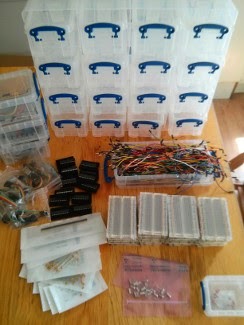
Shrimping factory One great strength of the Open Source community is our willingness to share information. Whether it's a new technique, a new program or a new supplier, we're happy to tell others what we've discovered. Shrimping with Tayda Cefn Hoyle's Shrimping It! website offers excellent value for people who want to build the Shrimp low-cost Arduino clone. I got the supplies for the Spa Shrimping session from my usual UK suppliers, but it would have been cheaper to get them from Cefn. The Shrimping It! site also tells you about Tayda Electronics . That's the company from whom the Makers of Morecambe buy supplies. I decided to try Tayda and placed a small order a few days ago. Fast delivery The Tayda website is clean, fast-loading and easy to navigate. 28 pin ZIF Their prices are very competitive, but I was worried that my order would take a long while to arrive. Tayda are based in Bangkok and Colorado, and I live in the UK. I need not...