Posts

Showing posts with the label #NeuralNetworks

Neural networks on the Raspberry Pi: Sigmoid, tanh and RL neurons

Image
A brief introduction to ANNs - part 3 In the previous post about ANNs we looked at the linear neuron and the perceptron. Perceptrons have been used in neural networks for decades, but they are not the only type of neuron in use today. When they were first invented, they seemed capable of learning almost anything. However, in 1969, Minsky and Papert published their book 'Perceptrons' which showed that a single perceptron could never be trained to perform the XOR function. You'll see in the next post why this is so (and why it's not a huge problem), but for now, let's look at three other common neuron models. Like the linear neuron and perceptron, these start by calculating the weighted sum of their inputs. Recall that you can implement the linear neuron like this:       ln←{⍺+.×⍵} sigmoid neuron calculates the same weighted sum of inputs, but then it applies the sigmoid function to the result. The sigmoid function is defined in wikip...

The new Raspberry Pi zero is here - and it's snappy!

Image
Spot the difference! The new Raspberry Pi zero is out and it has a camera connector . The picture on the right compares the new zero with its predecessor. They are very, very similar but the clever folks at Pi towers have re-routed the board to make room for a camera connector while keeping the size of the board unchanged. I've had a chance to play with the new Pi for a few days now and I love it. You can read my plans below but the main thing is that the new feature has been added without sacrificing the zero's already awesome capabilities. As you'd expect, existing software runs just as it did before. The new zero is currently in stock at several dealers in the UK and the USA. Details are on the Raspberry Pi website . Dealer info is at the bottom of their post. A camera has been one of the most-requested features for the zero. It opens up a huge range of new, exciting projects. There will be a huge demand for the new zero. Let's hope the stocks hold out ...

Neural networks on the Raspberry Pi: The Neuron

Image
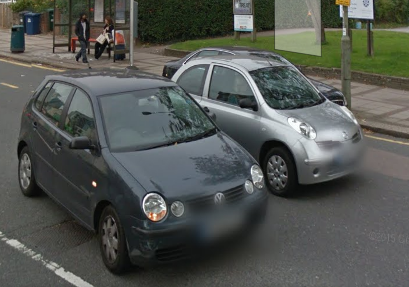
A brief introduction to ANNs - part 1 ANNs (Artificial Neural Networks) are systems that can process information using connected components called neurons . ANNs are inspired by real (biological) neural networks like the brain. ANNs are widely used for real-world information processing tasks. In the image below (courtesy of Google Street View) you can see that car number plates have been blurred. Google hides them to protect privacy, and the software that recognises what to blur is a Neural Network. Image courtesy Google StreetView The software   As I said yesterday , I developed the software in APL on a Raspberry Pi. You’ll find instructions on how you can run it further down. Neurons An ANN is made up of neurons . Neurons are usually grouped into one or more layers. Many types of neuron have been proposed, but they all have certain characteristics in common. A neuron has one or more inputs and a single output. Associated with each input is a weight....