Posts

The Shrimp: a low-fat Arduino clone
Image
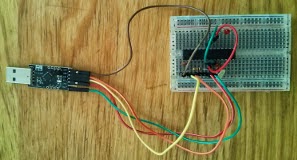
Last week I mentioned the Shrimp-based workshop that I'll be running at SPA on 30 June: 'build your own Arduino clone'. The workshop will run at the end of a full day so I'm keen to keep it as easy as possible. A random act of kindness has helped to make it even simpler than I'd expected. A delightful surprise When Cefn Hoile sent me the batch of CP2102 adapters I'd ordered for the workshop I discovered a delightful surprise: a full Shrimping It kit, complete with diagram and components. Cefn has been helping people to build their own Shrimps for a while, and he's got things down to a fine art. He's worked out a breadboard layout that reduces the number of jump wires you need. A change I'd planned (using a 5v LED with a built-in resistor) adds a little to the cost but simplifies the breadboard layout even more. Shrimplified for the SPA workshop I've ended up with this, which is about as simple as I can get using a crystal oscillator...

Shrimping It at the SPA

Image
based on the Shrimp I'm running a workshop at BCS SPA 2014  called 'Make your own Arduino ™  clone'. The clone you get to build is based on the Shrimp - a low-cost and very successful breadboard or stripboard based version of the popular Arduino microcontroller board. The BCS SPA conference is an annual event that's been running for 18 years, bringing together experts and practitioners to share the latest thinking in software development. SPA conferences are unique; the sessions are interactive and hands-on, so no-one suffers death by Po***Point. This year SPA is running from 29 June to 2 July at the BCS offices in central London. One part of the SAP tradition is that the formal programme is supplemented by diversions; the workshop is the diversion for Monday 30th June. It will run from 18:00 to 19:00 (at which point I'm off to the pub). Even if you're new to electronics and the world of Physical Computing, this hands-on workshop will send yo...

Near death by Mobile?

The night I think I nearly died A couple of nights ago I felt chilly and put on a sweater. A little later I felt something painfully hot against my chest. I realised that it was my mobile, which was in my shirt pocket under the sweater. I hastily took the phone out and turned it off. It was almost too hot to touch. A few minutes later it was back to normal and it has worked fine ever since. Here's what I think  must have happened. My body heat and the heat from the phone were retained by the insulation of the sweater, and the phone's LiPo battery must have started thermal run-away. Remember those exploding laptops a couple of years ago? I reacted in time, but overheating LiPo batteries are bad news. My phone was conveniently located next to my heart. A very close run thing! Lesson Learned Keep your phone ventilated and do nothing to overheat it. Jam tomorrow If you were expecting a post about PCB FAB companies, I'm afraid that has taken longer than I thought...

PCB design - Eagle and Fritzing

Image
Yesterday I got involved in a couple of discussions on Twitter on two related topics: choosing software for PCB design, and choosing PCB Fab companies to make short runs of prototype boards. I'll write a little about the PCB Fabs in another post. At the risk of having to don flame-proof safety gear, I'll share some of my experience from the last couple of years, and my current preferences. Quick2Wire Analogue Board Disclaimer Please don't expect an exhaustive survey. I don't normally work on Windows, and I don't have a Mac, so this is written from the perspective of a Linux user. That's why I have not tried DesignSPark PCB. Nor have I looked much at KiCad, simply because my first attempts some while ago were discouraging. Eagle and Fritzing The two products that I have used are Eagle and Fritzing. Eagle is very well established as a design tool for amateur and professional users. It's very capable, and has very extensive libraries. Since CAD...

The Pi and the Printing Press

Image
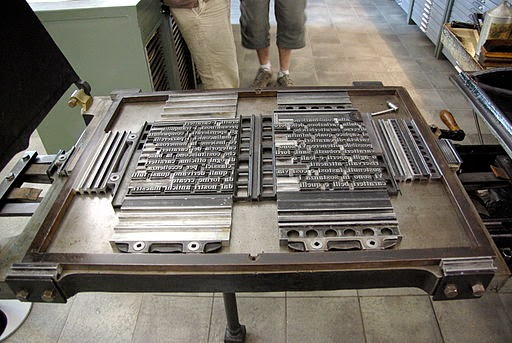
By Kristian Bjornard from Baltimore, USA (Lock up on a metal Gutenberg-style press)  [CC-BY-SA-2.0], via Wikimedia Commons From the Printing Press... Over five centuries ago Gutenberg introduced moveable type to Europe, and the whole world changed forever. His printing press heralded the era of mass communication, leading eventually to mass literacy, cheap textbooks, newspapers, scientific journals and other media that produced massive and rapid social change. It helped to fuel Renaissance and Reformation, and its effects persist in the digital age. ...to the Raspberry Pi Today the Pi is changing worldwide education in much the same way. Two brilliant, simple, Pi-compatible ideas stand out for me: KA Lite and Kiwix . KA Lite brings the content of Khan Academy to environments without high-speed reliable internet access. In many locations around the world, internet access is limited, expensive or non-existent but smartphones are cheap and widely used. Run a ...

Fabulous fun at Kids Adore Ditch

Image
I spent last Thursday at Kids Adore Ditch , and I can't remember when I last had so much fun. The event was organised (in less than two weeks!) by James @Monkchips Governor. It took place in the Shoreditch Village Hall - a great venue, with plenty of space, power and wifi bandwidth. Just as well! Over thirty kids turned up, and I counted at least nine different activities to keep them occupied. High spots included a banana-controlled quadcopter, a robotic arm, digital drawing, Minecraft on the Pi, Scratch, and a couple of coding-based games. Many of the activities were run by IBMers, and local company Kuato Studios also contributed. Special kudos to Neil Ford, who ran the minecraft station, and Linda Sandvik who introduced Scratch coding. More details, and some pictures, on Dan Light's blog . I took along some robots - two Pololu 3Pi models (seen below) and my very own C3pi (in the foreground). Courtesy Marco Abis  @ capotribu   The 3Pi robots ...

Countdown to Thursday - three days to go

Image
I'm racing ahead with preparations for this Thursday's Kids Adore Ditch . I've already had one small problem to overcome. Poorly 3pi When I looked closely at my 3pi on Friday I realised that the mounting bracket of one of the motors is broken. I've ordered a replacement but it will not arrive until Wednesday at the earliest. I had two 3Pi  demos in mind, and I'm a bit wary of reprograming on the day, so I decided it was time to get a second robot. HobbyTronics offered the best price, and for an additional charge I asked for delivery on Saturday Morning. The new robot arrived on time and I started to prepare the demo. Great documentation from Pololu It's been a while since I did anything with these robots, so I needed to remind myself about how to program them. I love the documentation on the Pololu web  site: it's simple, clear and correct, and covers Windows, Linux and OS/X users. I have the GNU gc++ avr cross compiler and avrdude installed on ...